
A New Study Highlights the Growing Impact of Compound Extreme Events
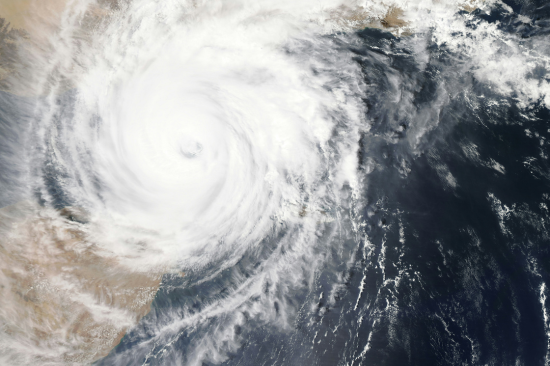
A recent study published in Science Advances finds that tropical cyclones undergoing rapid intensification over marine heatwaves can lead to substantially more serious economic damages. Analysing nearly 800 landfalling storms worldwide between 1981 and 2023, the research shows that such cyclones can generate almost double the economic losses of storms not influenced by these anomalously warm ocean conditions.
The findings underscore the importance of examining interactions between extreme events, particularly as ocean warming alters the physical processes governing storm development and impacts.
Understanding Rapid Intensification and Marine Heatwaves
Tropical cyclones, referred to as hurricanes, typhoons, or cyclones depending on the ocean basin they occur on, are typically characterised by low pressure at their centre and sustained winds that can reach above 120 kilometres per hour. Their destructive potential is typically associated with sustained high wind speeds, intense precipitation, and storm surge.
A central mechanism analysed in the study is rapid intensification, defined as an increase in sustained wind speed of at least 30 knots (approximately 55 km/h) within a 24-hour period. Various factors can lead to rapid intensification, including warm ocean temperatures, high humidity and low vertical wind shear, meaning that the wind speeds higher up in the atmosphere are very similar to the wind speeds near the surface. This process has become more frequent since the 1980s and is expected to continue increasing with ongoing warming. While it is not certain how CC is going to impact the frequency of tropical cyclones, an increase in intensification and strength is more certain.
Marine heatwaves - periods of abnormally high sea surface temperatures - represent an additional factor that can enhance this process. By providing an excess of thermal energy, these conditions act as an additional energy source for cyclones. The study highlights that when storms pass over such warm anomalies during their intensification phase, the resulting changes in storm structure and energy uptake can significantly alter their evolution prior to landfall.
Stronger Storm Dynamics and Pre-Landfall Impacts
The study’s analysis identifies distinct differences in storm characteristics depending on whether rapid intensification occurs and whether marine heatwaves are present. Rapidly intensifying cyclones exhibit substantially higher maximum wind speeds compared to non-intensifying storms. Within this group, storms influenced by marine heatwaves show further amplification of key parameters. They maintain elevated wind speeds in the days preceding landfall and produce higher rainfall rates at landfall compared to other storm categories. These pre-landfall conditions are particularly relevant, as elevated wind speeds and associated storm surges can begin affecting coastal areas several days before the cyclone makes landfall. The results of the study indicate that the interaction between rapid intensification and marine heatwaves not only increases peak intensity but may also extend the duration of high-impact conditions.
Assessing Economic Impacts Using Satellite-Derived Exposure Data
To quantify economic impacts, the study integrates cyclone track and intensity data with loss records and spatial indicators of development. A key methodological component is the use of “built-up volume” dataderived from the Global Human Settlement Layer. This type of dataset is generated from satellite data and other high-resolution imagery, combining information on building area and average building height to estimate the three-dimensional extent of infrastructure.
By using built-up volume as a proxy, the analysis accounts for variations in population density and infrastructure across affected regions. This allows for a more controlled comparison of storm impacts by isolating the influence of physical storm characteristics from differences in underlying development. Using this approach, the researchers find that rapidly intensifying cyclones interacting with marine heatwaves result in approximately 93% higher economic losses than comparable storms that do not experience these conditions. These findings demonstrate that the combined effect of ocean temperature anomalies and storm dynamics plays a measurable role in shaping disaster losses.
Regional Patterns and Evolving Risk Profiles
The study identifies a modest but consistent increase in the number of tropical cyclones influenced by marine heatwaves since 1981, with pronounced regional trends in the North Atlantic, North Indian Ocean, and parts of the Pacific basin. At the same time, the continued expansion of infrastructure in coastal areas increases exposure to cyclones. This combination of evolving hazard characteristics and growing exposure suggests a rising potential for economic losses in regions affected by these extreme events.
Implications for Forecasting and Risk Management
The findings highlight the need to explicitly account for interactions between oceanic and atmospheric extremes in forecasting and risk assessment frameworks. As marine heatwaves are projected to occur more frequently, their influence on cyclone behaviour is likely to become increasingly significant. The study points to the importance of integrating multiple hazard drivers into predictive models and risk assessments, particularly in the context of compound events. Improving the representation of these processes may enhance the ability to anticipate storm impacts and support more informed decision-making. Overall, the study contributes to a more detailed understanding of how interacting extreme events influence disaster risk, reinforcing the need to incorporate such dynamics into long-term climate adaptation and climate preparedness.
Read full story on PreventionWeb here
View the original study here
