Germany

country taxonomy block

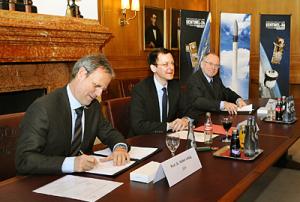
ESA and Eurockot today signed contracts for launching two ESA satellites: Sentinel-2A and Sentinel-3A will fly in 2013 on Rockot vehicles from the Plesetsk Cosmodrome in northern Russia for Europe’s GMES programme.


The contract signing by Matthias Oehm, Chief Executive Officer of Eurockot Launch Services GmbH, and Volker Liebig, Director of ESA’s Earth Observation Programmes, took place at the historic Chamber of Commerce of Bremen, Germany.
The Senator for Economics, Labour and Ports of the Free and Hanseatic City of Bremen, Martin Günthner, and the Chief Executive Officer of Astrium Space Transportation, Alain Charmeau, were also in attendance.

“With the launch of the first suite of Sentinels, a new era of Earth observation will start in Europe with the first worldwide operational monitoring system of environment and security,” noted Prof. Liebig.

Sentinel-2 and -3 are two of five Sentinel missions that ESA is...

more
Publishing date 09/02/2012

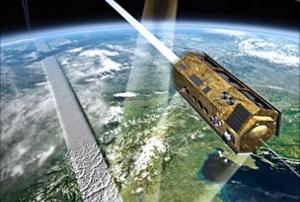
After a year in service, the German Earth observation satellite TanDEM-X, together with its twin satellite, TerraSAR-X, have completely mapped the entire land surface of Earth for the first time. The data is being used to create the world’s first single-source, high-precision, 3D digital elevation model of Earth. The German Aerospace Center (Deutsches Zentrum fur Luft- und Raumfahrt; DLR) controls both radar satellites, generates the elevation model and is responsible for the scientific use of TanDEM-X data. It is reminiscent of ballet on ice; throughout the last year, Germany’s radar satellites, TanDEM-X and TerraSAR-X, have been moving through space in close formation, at times just a few hundred metres apart. Strip by strip, they have recorded Earth from different angles and transmitted high-resolution radar data from their orbit at an altitude of 514 kilometres down to the three ground stations – Kiruna (Sweden), Inuvik (Canada) and O’Higgins (Antarctica...

more
Publishing date 17/01/2012

On June 14, RapidEye, a leader in wide area, repetitive coverage of Earth through its constellation of satellites announced that EyeFind, a tool that allows users to browse its entire archive, is now online. “We are very excited about rolling EyeFind out to our customers,” commented Frederik Jung-Rothenhausler, RapidEye’s Chief Technical Officer. “This is something we’ve developed internally, tested thoroughly and are quite confident in its ability and functionality. This is a major milestone which gives our distributors and direct customers an easy way to view every image we have.”

EyeFind allows customers to browse the entire RapidEye Library, its rapidly growing archive, based on date, cloud cover and product type. Advanced options allow for parameters to be entered on a map or for a shape file to be uploaded outlining an area of interest. Once the customer has located their needed images, an inquiry can be sent to RapidEye...

more
Publishing date 22/06/2011

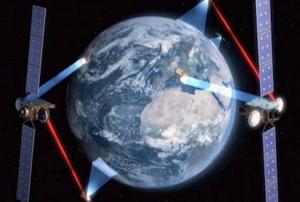
The contract signed between OHB System AG and Astrium Services is worth 7.4 million euros, or $10.7 million. The agreement gives OHB System authority to proceed with designing a satellite to fly in geostationary orbit more than 22,000 miles above Earth.The European Data Relay Satellite system will feature at least one dedicated spacecraft and a piggyback communications package to fly on a commercial broadcasting satellite.
OHB System will design and build the standalone EDRS platform in Bremen, Germany. Both spacecraft will use laser optical communications instruments to transmit up to 1.8 megabytes per second of data across distances of up to 25,000 miles, according to OHB System. The laser terminals will be built by Tesat-Spacecom, another German company.Germany is supplying the majority of the funding for the EDRS system. Astrium Services is overseeing its development.
The piggyback communications system should be launched in 2014 and the OHB System spacecraft will...

more
Publishing date 06/05/2011

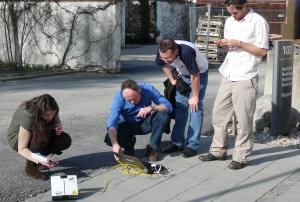
The Disaster Management Tool (DMT) is a mobile field system that allows field workers and control center officers to interactively enter and retrieve information about the areas of interest. It uses sensors (like GPS receivers) for automatic data collection. It also allows an easy and fast flow of the situation information, also across organizational and jurisdictional boundaries. And finally, it provides dynamic and interactive situation maps and reliable data storage.

The basic idea of the DMT training, which was attended by one UN-SPIDER expert, was to explore opportunities for a follow-up pilot project together with the Institute for Communication and Navigation (IKN) at DLR and the Italian NGO: Cooperazione Internazionale – COOPI, UN-SPIDER’s partner within the Disaster Preparedness programme in the South East African and South West Indian Ocean (DIPECHO), funded by the European Commission - Humanitarian Aid & Civil Protection (ECHO). The envisaged...

more
Publishing date 04/04/2011

This document contains the proposed UN-SPIDER workplan for the biennium 2012-2013 to be considered by the Scientific and Technical Subcommittee at its Forty-eighth session in Vienna, 7-18 February 2011. It includes the use of space-based solutions in disaster management plans and policies and in the implementation of risk reduction activities.

Published by: UNOOSA
For further information visit: http://www.oosa.unvienna.org/pdf/limited/c1/AC105_C1_2011_CRP15E.pdf

more
Publishing date 17/02/2011

The GMES User Forum was organized by the German Federal Ministry of Transport, Building and Urban Development (BMVBS) together with the German Federal Ministry for the Environment, Nature Conservation and Nuclear Safety (BMU) and in close cooperation with the German Aerospace Center (DLR). It brought together about 120 participants from a large number of German institutions, national agencies, and leading private companies for discussions with high-level representatives from the European Commission and the German Government. The main intention of this meeting was to inform potential users about the already existing and upcoming GMES core- and downstream services and to better integrate national needs and networks into the further planning. After the opening session and the introductory presentations held by the head of the GMES office in Brussels, Ms. Christine BERG, and delegates from the organizing ministries, the group of participants was divided into four different thematic...

more
Publishing date 04/11/2010
On 22 July 2010, researchers at the German Aerospace Center (Deutsches Zentrum für Luft- und Raumfahrt; DLR) facility in Oberpfaffenhofen published the first 3D images from the TanDEM-X satellite mission. Just one month after the launch of TanDEM-X (TerrraSAR-X add-on for Digital Elevation Measurement), which took place on 21 June 2010, DLR researchers have created the first digital elevation model – almost a week ahead of schedule. A group of Russian islands in the Arctic Ocean was selected for the first test.

The first successful experiment is the starting point for more 3D images. Close approach of the satellites also allowed acquisition of test images at lower latitudes. Shortly after the first acquisition, the opportunity arose to image a 50 x 30 kilometre area in the southern Russian region of Kalach on Don, about 100 kilometres northwest of Volgograd. This area was the target of the very first TerraSAR-X radar acquisition.

...
more
Publishing date 23/07/2010

NSAU experts and specialists of space industry enterprises of Ukraine paid a working visit to German Aerospace Centre (DLR), leading research institutes and companies of the space spectrum of Germany in the framework of Twinning Space project within Feb.1 – Feb.6, 2010 in order to define further perspectives of bilateral cooperation. 
In course of the visit Ukrainian delegation became acquainted with activities of German leading space sector companies: OHB Technology, EADS Astrium, Kayser Threde GmbH, IABG.

The working meetings with representatives of the German Space Operations Center (GSOC), National Communication and Navigation Institute, Institute of Robotics and Mechatronics, Institute of Space Systems. NSAU delegation was also invited to German Remote Sensing Data Center and Galileo Control Center (European Global Satellite Navigation System).

The main topic of all working meetings was discussion of the present state and determining of cooperation...

more
Publishing date 24/02/2010


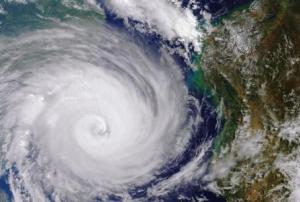
On October 14, 2009, the International Day for Disaster Reduction was used to illustrate the role of UN-SPIDER in a concrete case, namely the recent Tropical Cyclone on the Philippines. At the VIC Rotunda in Vienna, a presentation was given on the particular example. After a welcome address by Niklas Hedman (Chief Committee Services and Research Section, Office for Outer Space Affairs) and introductory remarks on space and disaster management by Juan Carlos Villagran (UN-SPIDER), Mr. Manangan, Minister at the Permanent Mission of the Philippines, presented his observations on the recent disaster and its management. Ms. Gerardo, Chair of the VIC Club Filipino, expressed her thanks for the contributions made for the people in the Philippines. Michael Leitgab (UN-SPIDER) then explained the role of UN-SPIDER in the case of the recent Tropical Cyclone, and Niklas Hedman gave the concluding remarks to close the event. In Bonn, the UN-SPIDER...

more
Publishing date 28/10/2009

The Japanese Aerospace Exploration Agency (JAXA) and the German Aerospace Center (DLR) today signed a Letter of Intent (LOI) concerning Mutual cooperation for satellite disaster monitoring.

In this LOI, both parties acknowledged the necessity to promote satellite application, especially Synthetic Aperture Radar (SAR) satellites, as well as related applied research, and to pursue such activities in an international manner.

For further information, please check:
http://www.jaxa.jp/press/2009/08/20090824_dlr_e.html

more
Publishing date 24/08/2009

The Applied Geoinformatics for Society and Environment (AGSE) Conference takes place on a yearly basis and is held in different places all over the world. The overall scope of this conferences is to offer an interdisciplinary, international forum for sharing knowledge about the science and application of geoinformatics with focus on developing countries.

Besides invited keynotes the conference invites presentations on a variety of topics. There will also be professional training and workshops about current topics in the fields of geoinformatics and photogrammetry.

AGSE 2019 will take place from 12 to 15 September 2019 at the Stuttgart University of Applied Sciences, Stuttgart, Germany. The title of the event is: “Digital Landscapes: Chances for Development”.

The conference is organized by the Stuttgart University of Applied Sciences, Stuttgart, Germany, and co-organized by the Laboratory for interoperable, and open-source Geospatial Software, Data and Standards (...

more

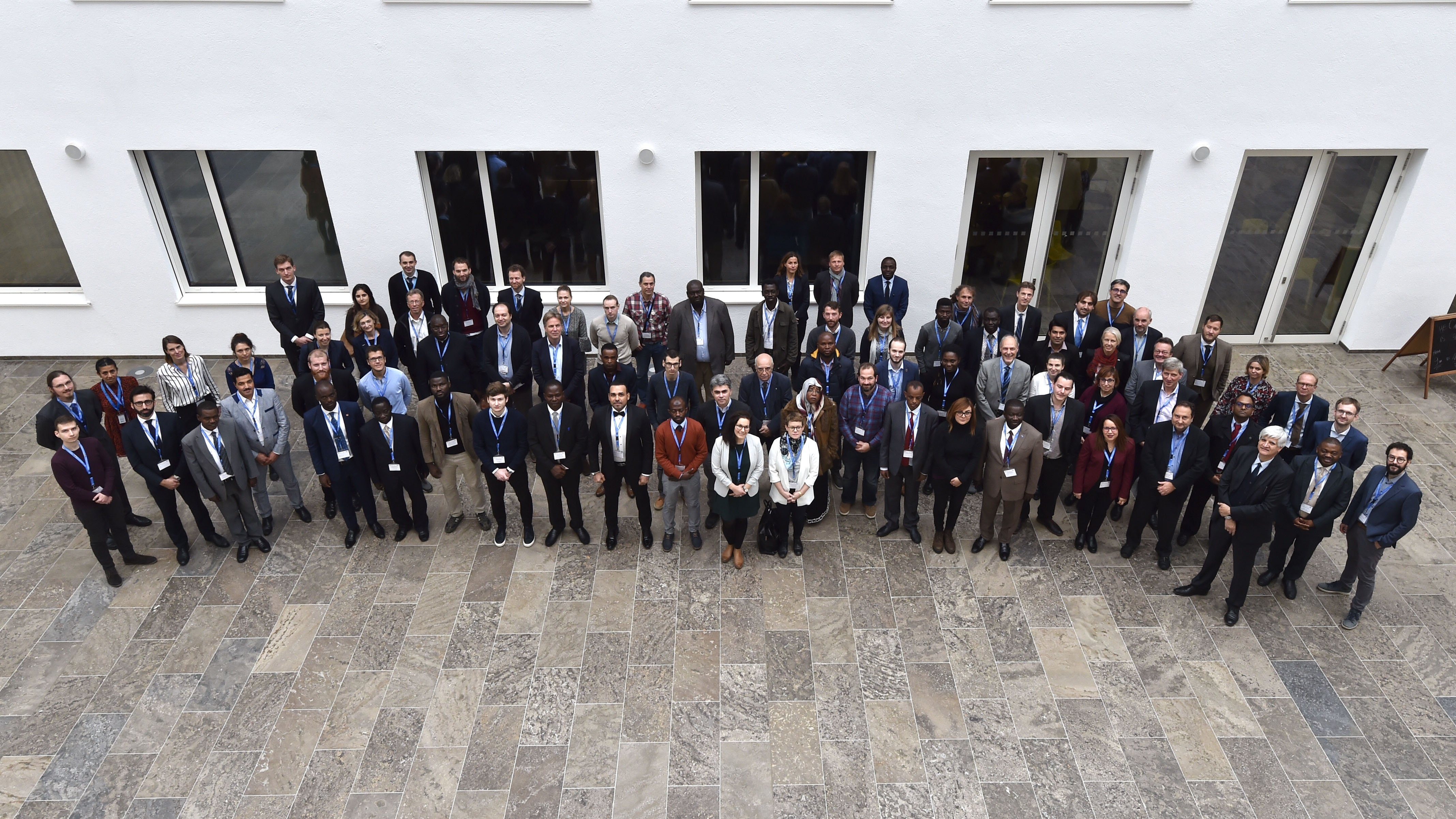
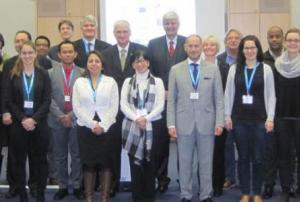
The UN-SPIDER/ GloFAS / DLR / ZFL International Workshop: “Space technologies for flood management” aimed at contributing to an increased use of satellite technologies and novel processing techniques to respond to challenges posed by disasters. The International Training Workshop aimed:

  • To raise awareness regarding novel techniques and tools developed by DLR, the Copernicus programme, and UN-SPIDER useful in flood management.
  • Contribute to increase the skills of young professionals engaged in the use of Earth observation and novel geospatial information technologies to contribute to flood management efforts.
  • Facilitate networking efforts among young professionals engaged in disaster management efforts.

The International Training Workshop included plenary presentations, a training on the use of novel techniques to process satellite imagery in case of floods, and a simulation of floods to familiarize participants with novel procedures...

more

Satellite observations are a key element in an integrated and sustained climate observing system and have been critically important for monitoring and understanding the Earth’s climate system during the past several decades. The expected completion of the IPCC Fifth Assessment (AR5) in 2013-2014 makes it timely to discuss these achievements, to assess future opportunities and challenges with satellite derived climate information, and to provide guidance on future priorities.

The symposium will be an important step towards defining requirements, and the further development of an efficient and sustained international space-based Earth observing system. This symposium is intended to bring together the international experts in climate observations, research, analysis and modelling to present and discuss results from their studies, with a particular emphasis on the role of space-based Earth observations in improving our knowledge of the current climate at global and regional...

more

Note: Deadline for abstract submission has been extended. New deadline is 15th February 2016.

You can submit your abstract here: http://www.earsel.org/symposia/2016-symposium-Bonn/papers.php. If ou would like to be considered for the session organized by UN-SPIDER, make sure to check "Disaster management" as the applicaion field in your submission. The session will focus on Earth observation applications for the Sendai Framework for Disaster Risk Reduction 2015-2030.


EARSeL is a scientific network of European remote sensing laboratories, coming from both academia and the commercial/industrial sector, which covers all fields of geoinformation and earth observation through remote sensing. All scientists, professionals and researchers involved or interested in the field of the symposium are strongly encouraged to present papers according to the...

more

Registration

Click here to register for the WSF 2024

  • The deadline to apply for funding closes 01.09.2024
  • The call for poster abstracts closes  01.09.2024
  • Deadline for registration to attend in person with visa support request but without funding closes: 03.11.2024

Background

As the planet faces increasing environmental and societal challenges, it requires effective legal frameworks, strong partnerships and global cooperation in order to achieve the goal of sustainable development.

Space science and technology bring an abundance of unique and fundamental benefits to humanity. With growing technological innovation, space exploration serves as a key provider of applications for life on Earth. Space tools enable and drive sustainable development by providing...

more

Global Partnership on Space Technology Applications for Disaster Risk Reduction (GP STAR) is a global partnership that was launched at the third World Conference on Disaster Risk Reduction in Sendai in 2015. It is committed to fostering better and more integrated use of space-based technologies in disaster risk reduction efforts around the world. The partnership conducted its first meeting in Bonn, Germany from 25 to 28 May 2015.

The International Expert Meeting in December 2016 built upon the efforts carried out to contribute to the implementation of the Sendai framework. It provided decision-makers from the disaster management community with guidance on the use of space technology applications in combination with local, in-situ data for better disaster-risk visualisation. The meeting also promoted the use of Earth Observation to track and identify ways to manage climate-related extreme events, e.g. floods, storms or droughts. Lastly,...

more

Climate observations are of fundamental importance for reconstructing, monitoring, understanding, attributing, predicting, projecting, mitigating, and adapting to climate change. They are instrumental for assessments and policy implementations, such as the IPCC and the 2015 Paris Agreement. The need for systematic climate observations is increasing with the growing urgency for adaptation and mitigation measures that can require high resolution information. It is therefore crucial to make further progress towards achieving a fully implemented and sustainable global observing system for climate applications.

The second GCOS Climate Observation Conference (17-19 October 2022, Darmstadt, Germany) will focus on activities and solutions that help to achieve a fully implemented, sustainable, and fit for purpose global observing system for climate. The Conference will also provide the occasion to celebrate GCOS 30th Anniversary and take stock of the progress achieved by the global...

more

"United Nations International UN-SPIDER Workshop: Space-based Information and Solutions for Disaster Management and Emergency Response" For more information visit: http://www.unoosa.org/oosa/en/unspider/index.html

more

Participating Organizations: Bonn International Centre for Conversion (BICC), DigitalGlobe (DG), DG/Tomnod (via webconference), DIFD (via webconference) (UK), DLR (Germany), EC‐GROW Copernicus, EC‐JRC (via webconference), Humanitarian OpenStreetMap Team (HOT/OSM), ImageCat, ITHACA (Italy), NDRCC (China), Pacific Disaster Center (PDC) (US), University of Bonn, UNOOSA/ UN-SPIDER, USGS (via webconference) (US)


Meeting Summary

The 2015 spring meeting was the second IWG-SEM meeting, which was organized as a combination of a physical and web-based conference. 23 participants joined the meeting in person or via web-video-conference.

The agenda included a review and lessons learned of the Nepal earthquake, collaborative mapping, the issuing of the IWG-SEM Emergency Mapping Guidelines 2.0 and the earthquake chapter, and the IWG-SEM GeoRSS.

The detailed meeting outcomes as well as the slides of the presentations are available...

more

Introduction

The international science community is invited to participate in the EarthCARE Science and Validation Workshop, which is jointly organized by the German Aerospace Center (DLR), the German EarthCARE Project Office at the Max Planck Institute for Meteorology (MPI-M) and the European Space Agency (ESA), in cooperation with our partners, the Japan Aerospace Exploration Agency (JAXA) and the National Institute of Information and Communication Technology (NICT).

The EarthCARE Mission

The Earth Cloud, Aerosol and Radiation Explorer (EarthCARE) will provide three-dimensional profiles of clouds and aerosols collocated with observations of reflected solar and emitted thermal radiation in order to quantify the impact of clouds and aerosols on radiation. The mission is being implemented, in cooperation with JAXA and NICT, as the sixth ESA Earth Explorer Mission, with a target...

more

The Regional Support Offices Meeting 2024 was conducted and organised by UN-SPIDER at the premises of the UN Campus in Bonn. It was held back-to-back with the UN-SPIDER Bonn International Conference on Space-based Solutions for Disaster Management - "Early Warnings for All".

The UN-SPIDER programme currently has 27 Regional Support Offices (RSOs). These RSOs are engaged in supporting activities of UN-SPIDER such as technical advisory support, rapid mapping during emergency response, preparing specific publications and contents for the knowledge portal and contributing to the workshop and conferences.

Every year, UN-SPIDER organizes a meeting with the RSOs to discuss the progress and new activities.
At this year’s meeting, 13 RSOs joined the meeting in...

more

"Taking the pulse of our planet from space"

Held every three years, the Living Planet Symposium brings together scientists and researchers from all over the world to present and discuss the latest findings on Earth sciences and advances in Earth observation technologies.

Objectives:

  • Understand Earth Systems: Prove how satellite data and open science contribute to our understanding of the different Earth systems, climate and their interactions.
  • Advance future technology for Earth Observation missions: Demonstrate new Earth observation instruments and technologies for existing and future missions.
  • Nurture public & private sector partnerhips: Highlight the importance of existing and new partnerships, expand the Earth observation user base, increase access to capital and commercialisation.
  • Enable the Earth Observation digital transformation: Demonstrate how next generation technologies will create new...
more

Link to registration: https://indico.un.org/event/1007916/

Agenda

To access the agenda (pdf), click the link here.

To access the report (pdf), click the link here.


Background

Natural and man-made disasters cause tremendous damage to societies around the world. They lead to loss of lives and property, displace people from their homes and destroy livelihoods, and disrupt sustainable development efforts worldwide. In recent years, climate change, extreme weather, population growth, and urbanization have led to an increasing number of people being threatened by natural disasters, and it has become a global challenge to mitigate disaster risks and...

more